Structured Foundation
A step-by-step study of symbolism, houses, planets, aspects, and interpretation methods within a coherent learning sequence.
A two-year program for students who want to develop a structured understanding of astrological methods, learn to work with natal charts, and apply their knowledge in consultation, analytical, and research settings.
The program is designed as a coherent system rather than a collection of isolated interpretations: from core principles and chart construction to interpretation, forecasting, ethical practice, and working with individual client questions.
The Applied Astrology program combines the classical Western tradition, an introduction to historical astrological systems, and contemporary approaches to the analysis of personality, life cycles, and interpersonal dynamics.
Students learn not only to interpret individual chart factors, but also to understand how they interact, formulate reasoned conclusions, work with a client’s question, and communicate consultation results responsibly.
The curriculum progresses from foundational topics to advanced disciplines, practical assignments, electives, and preparation of the final diploma project.
A step-by-step study of symbolism, houses, planets, aspects, and interpretation methods within a coherent learning sequence.
Learning examples, independent assignments, and analysis of realistic tasks help students move from theory to confident practical application.
Attention to ethics, clear communication, and the boundaries of an astrologer’s competence when working with people.
The curriculum combines classical astrological traditions, chart-analysis methods, and specialized areas that support the practical use of astrology in consultation and research contexts.
View the Full CurriculumChart construction and interpretation, planets, signs, houses, aspects, and integrated analysis of relationships between chart factors.
Study of selected historical systems and methods that broaden understanding of the development of astrological thought.
Methods for analyzing life cycles, time periods, and possible scenarios of how events may unfold.
Study of personality expression, behavioral patterns, and interpersonal dynamics through astrological indicators.
Study of traditional astrological concepts concerning the body, rhythms, and correspondences, with clear attention to the limits of an astrologer’s competence.
Analysis of geographic space and the relationship between location and astrological chart factors.
Work with charts of events, social processes, and natural phenomena within educational and research assignments.
Analysis of two-chart interaction, relationship dynamics, strengths, and potentially challenging areas of communication.
In the second year, students work with fixed stars, astrological parts, more advanced interpretation methods, and practical assignments.
The program moves from foundational knowledge to advanced interpretation, practical assignments, and an independent final diploma project.
The first year develops the foundational and intermediate knowledge needed to understand the chart, astrological symbolism, and the more advanced work that follows.
The second year expands the student’s analytical toolkit and focuses on more advanced methods, specializations, and practical assignments.
Students may take part in thematic study groups and E-TERRA research projects. These activities help reinforce course material, discuss complex cases, and develop independent research skills.
Additional exploration of selected areas and methods.
Work with learning examples and integrated interpretation.
Participation in internal initiatives and the Institute’s academic community.
Completion of the program includes an independent diploma project demonstrating the student’s ability to work with a chosen topic, sources, and methods of astrological analysis.
The program combines theoretical preparation, work with astrological materials, practical assignments, and a final diploma project.
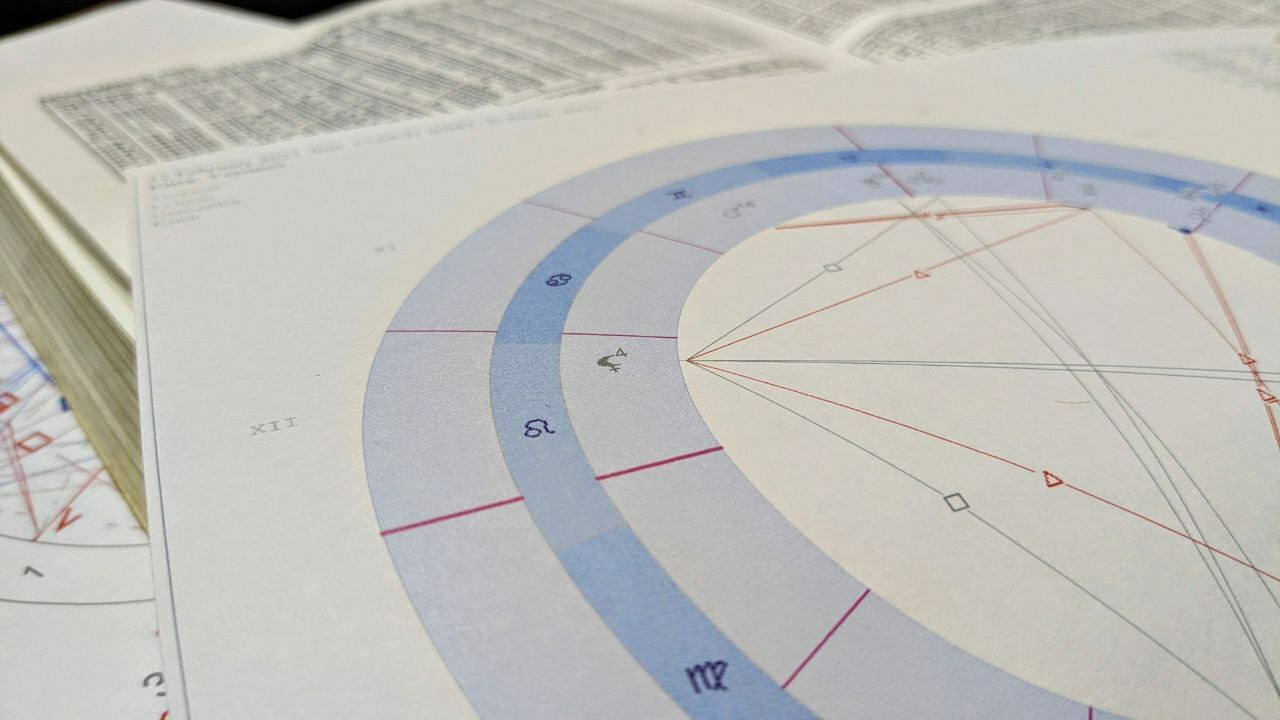
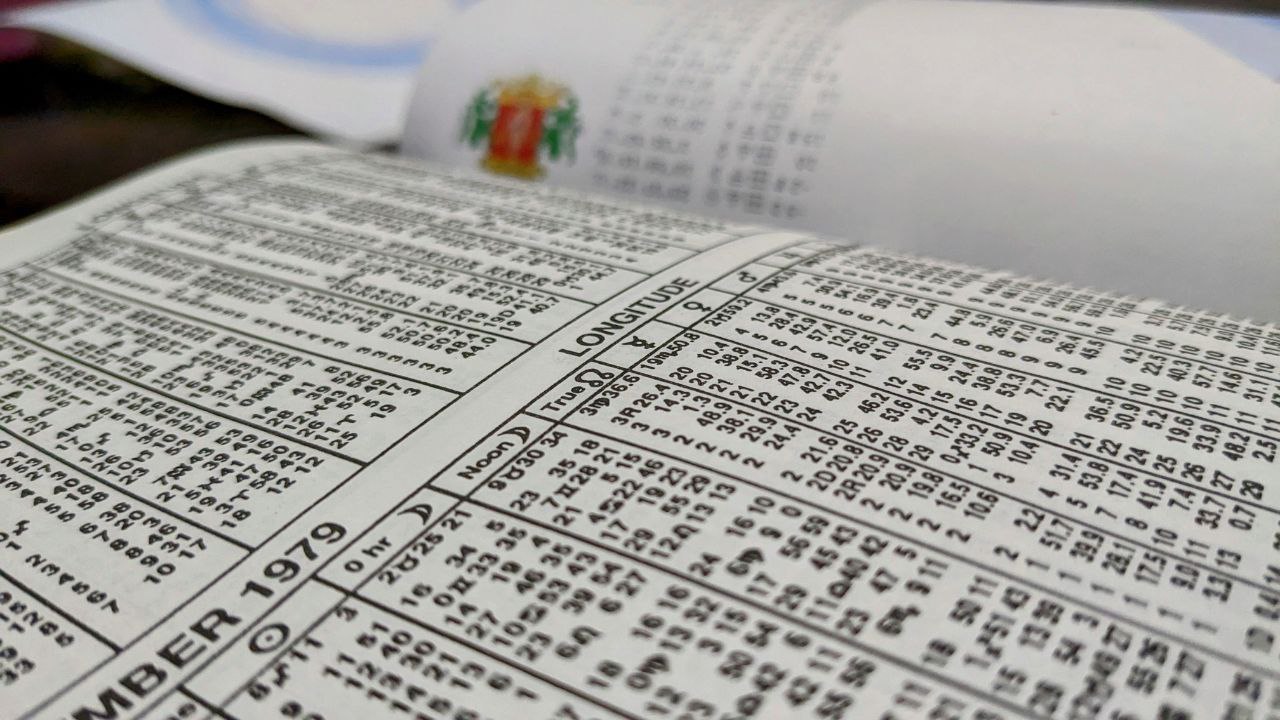
Over two years, students progress from core concepts to advanced interpretation, specialized disciplines, and integrated practical work.
Analysis of charts, tables, symbolic correspondences, and examples needed to build a strong working foundation.
Reinforcement of theoretical knowledge through systematic analysis, interpretation, and independent work.
Preparation and final assessment of an independent project on a chosen topic at the end of the program.

The program develops skills for independent astrological analysis, consultation work, preparation of research materials, and continued professional development.
Build a coherent chart interpretation, connect individual indicators, and formulate clear conclusions.
Prepare and conduct astrological consultations with attention to ethics, confidentiality, and appropriate limits of competence.
Analyze life cycles, time periods, and possible scenarios without categorical or fatalistic claims.
Use synastry and astropsychological indicators to explore patterns of interaction between people.
Find and evaluate sources, formulate a topic, prepare analytical materials, and participate in research projects.
Prepare thematic articles, lectures, research reports, and educational materials related to astrology.
Students may participate in thematic meetings, prepare presentations, develop their own materials, and contribute to the academic life of E-TERRA.
Lectures, discussions, study groups, and internal professional meetings.
Preparation of research texts and thematic presentations.
Continue developing a chosen area after completing the core program.
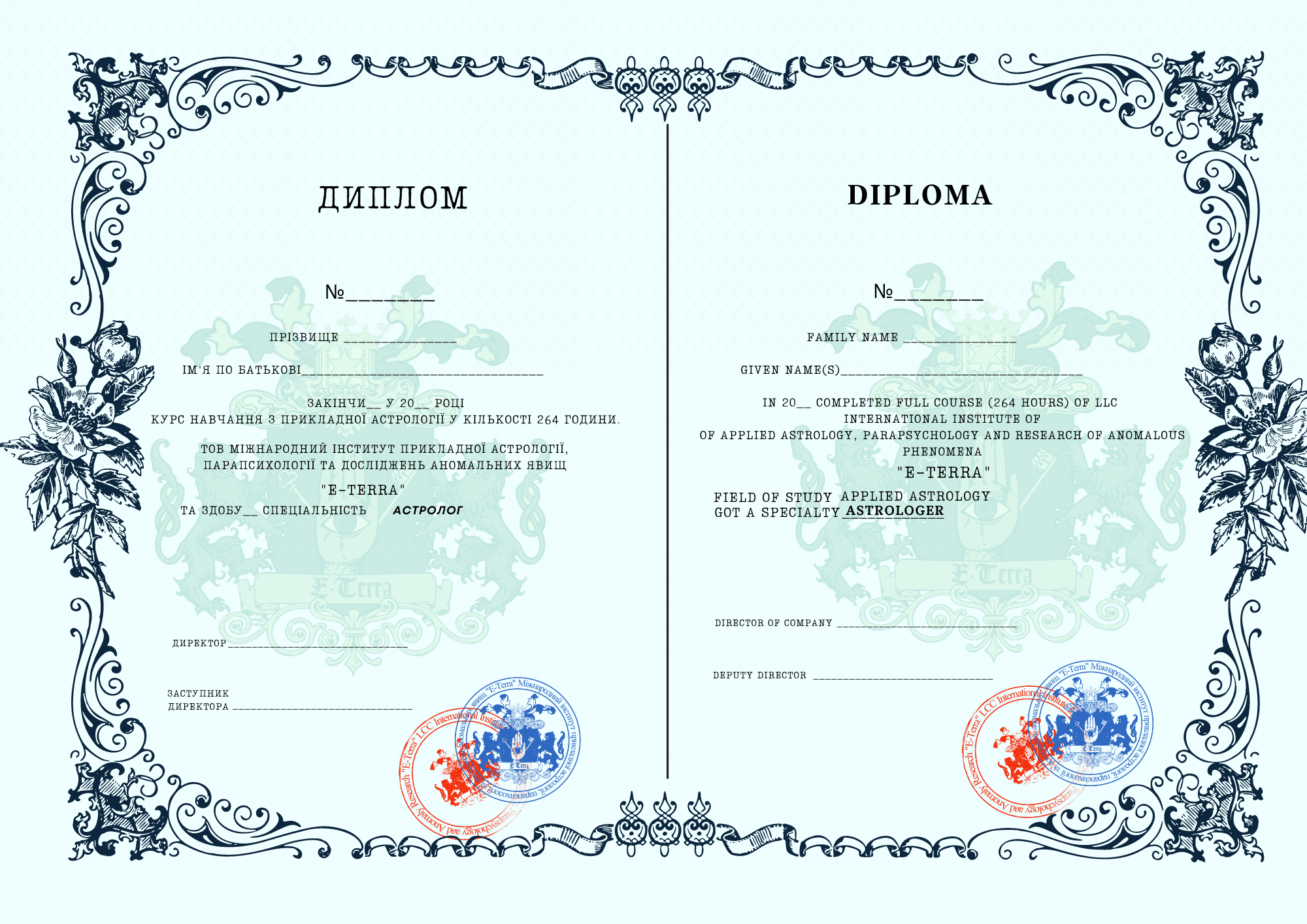
E-TERRA documents confirm completion of the program and can be verified through the Institute’s official digital services.
E-TERRA Institute diploma issued in Ukrainian and English.
Certificates confirming completion of selected disciplines and specialized learning modules.
A unique diploma identifier used to verify authenticity on the Institute website.
The Applied Astrology program is designed as a structured pathway from foundational concepts to independent analysis, specialization, and a final diploma project.
Study progresses from core concepts to more advanced methods, practical assignments, and second-year disciplines.
Students explore different astrological systems and applied areas for further development.
Theory is reinforced through learning examples, integrated analysis, and independent work.
Thematic study groups, research projects, discussions, and opportunities to develop original materials.
At the end of the program, each student prepares an independent final project on a chosen topic.
Each diploma receives a unique identifier and can be verified through the Institute’s official verification page.
Go to VerificationReview the full curriculum, study terms, and tuition information, then submit your application to the Applied Astrology program.
Before applying, we recommend reviewing the study terms and conditions and choosing the study format that best fits your schedule.